Types of Visa: A Complete & Easy Guide for International Travel
Planning to travel abroad for work, studies, business, or holidays? One of the most important things you need before boarding a flight is a visa. Many travelers get confused because there are different types of visas, each meant for a specific purpose.
In this guide, we’ll explain the types of visa, their purpose, and who should apply for them — in simple words. Whether you are traveling for the first time or planning an international trip for business or exhibitions, this blog will help you understand visas better.
What Is a Visa?
A visa is an official document or stamp issued by a country that allows a foreign citizen to enter, stay, or leave that country for a specific period. It is usually attached to your passport and mentions how long you can stay and what activities you can do.
Each visa is issued based on the purpose of travel, such as tourism, business, education, or employment.
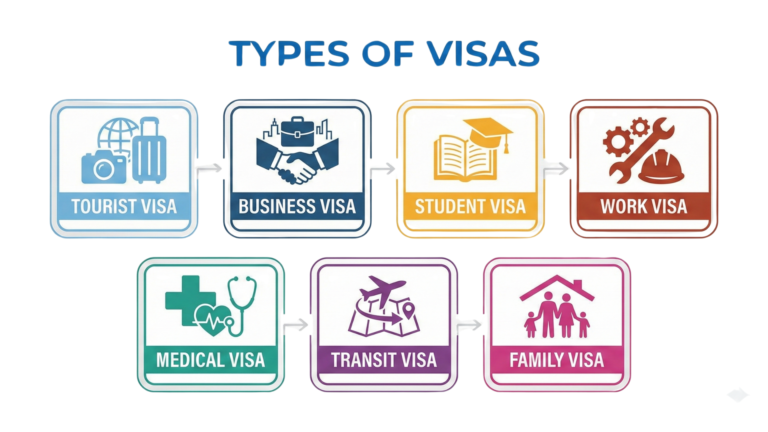
1. Tourist Visa
A tourist visa is issued to people who want to travel for leisure, sightseeing, holidays, or visiting friends and family.
Key features:
Short-term visa (usually 15 days to 6 months)
No business or work allowed
Ideal for vacations and family visits
Who should apply?
People planning holidays, sightseeing, or visiting relatives abroad.
2. Business Visa:
A business visa is meant for professionals traveling for business-related activities like meetings, exhibitions, trade fairs, and conferences.
Key features:
Allows business meetings and networking
No employment or salary allowed in the host country
Often issued for multiple entries
Who should apply?
Business owners, exporters, importers, and professionals attending international exhibitions or meetings.
3. Work Visa / Employment Visa
A work visa allows a person to work legally in a foreign country.
Key features:
Requires a job offer or employment contract
Long-term visa
Strict documentation and approval process
Who should apply?
Individuals who have secured a job abroad.
4. Student Visa
A student visa is issued to students who want to study abroad in schools, colleges, or universities.
Key features:
Valid for the duration of the course
Limited part-time work allowed in some countries
Requires admission letter from an educational institution
Who should apply?
Students planning to study overseas.
5. Transit Visa
A transit visa is required when you pass through a country while traveling to another destination.
Key features:
Very short validity (24–72 hours)
No stay allowed outside transit area in most cases
Who should apply?
Travelers with connecting flights through another country.
6. Medical Visa
A medical visa is issued to people traveling for medical treatment.
Key features:
Issued for specific treatment duration
Requires medical documents and hospital invitation
Attendant visa may also be issued for caregivers
Who should apply?
Patients traveling abroad for medical procedures or treatment.
7. Conference Visa
A conference visa is for individuals attending international conferences, seminars, or workshops.
Key features:
Short-term visa
Requires invitation from conference organizers
Who should apply?
Professionals, researchers, or delegates attending global conferences.
8. Diplomatic & Official Visa
This visa is issued to government officials and diplomats traveling for official work.
Key features:
Special privileges and exemptions
Issued only for official government purposes
Who should apply?
Government representatives and diplomats.
Types of Visa Based on Entry
Single-Entry Visa
Allows entry into a country only once.
Double-Entry Visa
Allows entry twice during the visa validity.
Multiple-Entry Visa
Allows multiple entries within the validity period, ideal for frequent travelers.
Types of Visa Based on Duration
Short-Term Visa: Valid for a few days or months
Long-Term Visa: Valid for several years (work, study, residency)
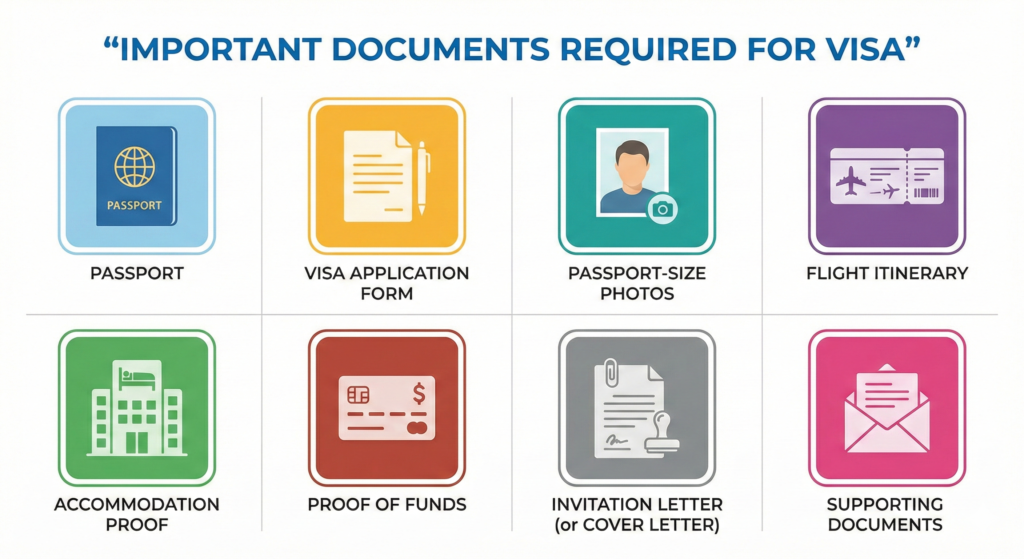
Important Documents Required for Visa
While documents may vary by country, common requirements include:
Valid passport
Visa application form
Passport-size photographs
Travel itinerary
Hotel booking or invitation letter
Financial proof
Purpose-specific documents (job offer, admission letter, etc.)
Why Choosing the Right Visa Is Important
Applying for the wrong visa can lead to:
Visa rejection
Travel delays
Entry denial at immigration
Always choose a visa that matches your travel purpose and submit correct documents.
Final Thoughts
Understanding the types of visa makes international travel smoother and stress-free. Whether you are traveling for tourism, business, studies, or work, selecting the right visa is the first and most important step.
If you’re unsure about visa documentation, eligibility, or the application process, professional visa assistance can save time and avoid mistakes.
Planning international travel and visa processing?
Make sure your visa type matches your purpose — because the right visa opens the door to a smooth journey.